
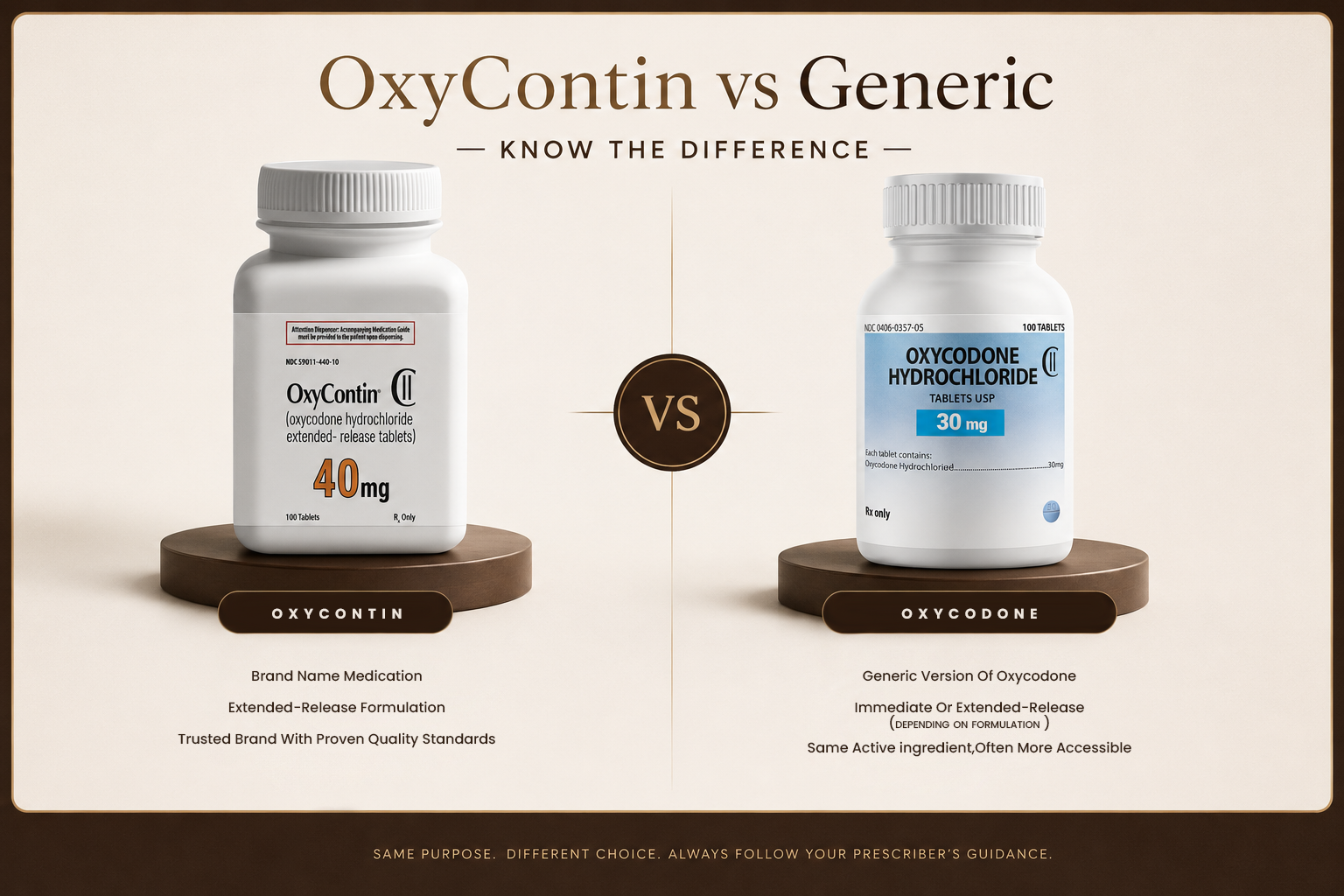
Extended-Release and Immediate-Release Oxycodone Vs OxyContin
When it comes to managing moderate to severe pain, two names frequently appear in discussions between patients and healthcare providers: OxyContin and Oxycodone. Because both medications contain the same active ingredient, many people assume they are identical. However, there are important differences that affect how they work, how long they provide relief, and the types of pain they are commonly prescribed to treat.
Understanding these distinctions can help patients better understand their treatment plans and the role each medication plays in pain management.
What Is Oxycodone?
Oxycodone is a prescription opioid analgesic used to relieve moderate to severe pain. It works by interacting with opioid receptors in the brain and nervous system, changing how pain signals are processed and perceived.
The immediate-release form of oxycodone is designed to act quickly. After administration, it is absorbed into the bloodstream and begins providing pain relief relatively fast. Because of this rapid action, healthcare providers often prescribe it for acute pain situations such as injuries, surgical recovery, or severe short-term discomfort.
For many patients, immediate-release oxycodone serves as a temporary solution while the body heals from a specific condition or procedure.
What Is OxyContin?
OxyContin is a brand-name extended-release version of oxycodone. Although it contains the same active ingredient, it uses a special delivery system that releases medication gradually over an extended period.
Rather than providing a quick burst of pain relief, OxyContin is intended to maintain more consistent levels of medication throughout the day. This makes it suitable for individuals who require ongoing pain management rather than occasional treatment.
Patients with chronic pain conditions often benefit from the longer duration of action because it reduces the need for frequent dosing and may help provide more stable symptom control.
OxyContin vs Oxycodone: Quick Comparison Table
| Feature | OxyContin | Oxycodone (Immediate-Release) |
| Active Ingredient | Oxycodone | Oxycodone |
| Release Type | Extended-Release (ER) | Immediate-Release (IR) |
| Purpose | Long-term pain management | Short-term pain relief |
| Onset of Action | Gradual | Faster |
| Duration of Relief | Up to 12 Hours | Approximately 4–6 Hours |
| Dosing Frequency | Usually Every 12 Hours | Every 4–6 Hours as Directed |
| Best For | Chronic Pain | Acute Pain |
| Breakthrough Pain | Not Typically Used | Commonly Used |
| Daily Convenience | Fewer Doses Required | More Frequent Dosing |
| Formulation | Long-Acting Tablet | Short-Acting Tablet, Capsule, Liquid |
The Main Difference Between OxyContin and Oxycodone
The most important distinction between these medications is not the ingredient itself but the way the medication is released into the body.
Immediate-release oxycodone is designed for fast pain relief. It enters the bloodstream quickly and typically provides relief for several hours before another dose may be needed.
OxyContin, on the other hand, releases oxycodone slowly and steadily over time. This extended-release design allows pain relief to last significantly longer and supports around-the-clock pain management.
As a result, immediate-release oxycodone is commonly used when rapid relief is needed, while OxyContin is generally prescribed when pain is persistent and ongoing.
How These Medications Work in the Body
Both medications belong to the opioid class of drugs. They reduce pain by attaching to opioid receptors located throughout the central nervous system.Buy Meds Online.
Once these receptors are activated, pain signals are less effectively transmitted to the brain. This can result in a reduced perception of pain and an increased sense of comfort.
Because both medications contain oxycodone, they produce similar effects. The primary difference lies in the timing of those effects. Immediate-release oxycodone provides a quicker response, while OxyContin offers a more gradual and prolonged effect.
Why Release Time Matters
Pain is not always experienced in the same way. Some patients deal with sudden episodes of severe discomfort, while others experience pain continuously throughout the day.
For someone recovering from surgery, rapid pain relief may be the priority. Immediate-release oxycodone can help address these short-term needs because it begins working relatively quickly after administration.
For individuals with chronic pain conditions, the goal is often maintaining consistent symptom control. OxyContin’s extended-release design helps avoid major fluctuations in medication levels, potentially leading to steadier pain management.At MasterMedication.com
This difference in release timing is one of the primary reasons healthcare providers choose one formulation over the other.
Common Medical Uses
Immediate-release oxycodone is frequently prescribed for short-term pain conditions. Patients recovering from surgical procedures, injuries, or dental work may receive this medication when significant pain relief is needed during the healing process.
Order OxyContin Online is typically reserved for situations involving long-term or chronic pain. Patients with cancer-related pain, severe arthritis, chronic back pain, or other persistent pain disorders may require continuous opioid therapy that extends throughout the day and night.
Because of its extended-release properties, OxyContin is generally not intended for occasional pain episodes or situations where immediate relief is required.
Benefits of Immediate-Release Oxycodone
One reason immediate-release Buy Oxycodone Online remains widely used is its ability to provide prompt pain relief. When pain appears suddenly or increases unexpectedly, a rapidly acting medication may be more appropriate.
The shorter duration of action can also make dosage adjustments easier. Healthcare providers may modify treatment plans more quickly because the medication does not remain active in the body for as long as extended-release formulations.
Additionally, immediate-release oxycodone is commonly used for breakthrough pain, which refers to episodes of severe pain that occur despite ongoing pain-management therapy.
Benefits of OxyContin
OxyContin offers several advantages for patients who require long-term pain control.
The extended-release formulation helps maintain more stable medication levels, reducing the peaks and valleys that can occur with shorter-acting medications. This steady release may provide more consistent symptom management throughout the day.
Another benefit is convenience. Because Purchase OxyContin generally lasts much longer than immediate-release oxycodone, patients often require fewer doses. This can simplify treatment schedules and improve adherence to prescribed therapy.
Many individuals also find that extended-release pain control helps reduce interruptions caused by recurring pain, including nighttime discomfort.
Side Effects and Safety Considerations
Since both medications contain oxycodone, they share many of the same side effects. Common reactions may include drowsiness, dizziness, nausea, constipation, fatigue, dry mouth, and sweating.
More serious risks can occur with any opioid medication. One of the most significant concerns is respiratory depression, a condition in which breathing becomes dangerously slow or shallow. This risk may increase when opioids are combined with alcohol, sedatives, or certain other medications.
Long-term use can also lead to physical dependence. Dependence means the body adapts to the medication, and stopping treatment suddenly may result in withdrawal symptoms.
Healthcare providers carefully monitor opioid therapy to balance pain relief with patient safety.
Why OxyContin Should Never Be Crushed or Chewed
An important safety consideration involves the extended-release design of OxyContin tablets.
The medication is engineered to release oxycodone gradually over many hours. Crushing, chewing, breaking, or dissolving the tablet can interfere with this mechanism and release a large amount of medication at once.
This can significantly increase the risk of overdose and serious breathing problems.
For this reason, OxyContin tablets should always be taken exactly as directed and swallowed whole.
Frequently Asked Questions (FAQs)
1- Is OxyContin the same as oxycodone?
No. OxyContin contains oxycodone as its active ingredient, but it is an extended-release formulation designed to provide long-lasting pain relief. Immediate-release oxycodone works faster and has a shorter duration.
2- Which works faster, OxyContin or oxycodone?
Immediate-release oxycodone works faster because it releases medication into the bloodstream quickly. OxyContin is designed to release medication gradually over time.
3- How long does OxyContin last?
OxyContin is formulated to provide pain relief for approximately 12 hours, making it suitable for around-the-clock pain management.
4- How long does immediate-release oxycodone last?
Immediate-release oxycodone generally provides pain relief for about 4 to 6 hours, depending on the individual and prescribed dose.
5- Is OxyContin stronger than oxycodone?
Neither medication is inherently stronger because both contain oxycodone. The primary difference is how quickly the medication is released and how long it remains active.
6- Can OxyContin be used for sudden pain?
OxyContin is not typically used for sudden or breakthrough pain. It is intended for continuous pain management rather than immediate symptom relief.
7- Why is OxyContin taken less frequently?
Because OxyContin releases oxycodone slowly over an extended period, it usually requires fewer doses throughout the day compared to immediate-release oxycodone.
8- Can patients switch between OxyContin and oxycodone?
Healthcare providers may switch patients between formulations when medically appropriate. Any transition should be supervised by a qualified healthcare professional.
Final Thoughts
Although OxyContin and oxycodone contain the same active ingredient, they serve different purposes in pain management. Immediate-release oxycodone is designed for rapid relief of acute or breakthrough pain, while OxyContin provides extended pain control for patients who require consistent, around-the-clock treatment.
The choice between these medications depends on the patient’s condition, treatment goals, pain severity, and overall healthcare plan. Understanding the differences between OxyContin and oxycodone allows patients to have more informed conversations with healthcare providers and better understand the role these medications may play in comprehensive pain management.